
Cut Install Rework by 50% with 3D Configurator‑Generated Install Docs
Stop returns, site re-measures and warranty callbacks: a step‑by‑step guide showing how a real‑time 3D + AR configurator auto‑creates branded quotes, install sheets, e‑sign contracts and crew tasks so you close jobs right — first time.
Table of contents
- Why install rework is a hidden margin killer
- The buyer intent: what you want when evaluating tools
- How a single configuration prevents rework — end‑to‑end (step‑by‑step)
- Typical outcomes: what installers measure after adopting an integrated workflow
- Practical checklist to implement this at your company (30–60 day rollout plan)
- Why this is different from ‘3D for marketing’
- Quick ROI model (example)
- Where to start (next steps)
- Bottom line
- Sources
Why install rework is a hidden margin killer
For outdoor‑living installers (pergolas, verandas, awnings, AC installs) doing work twice is expensive: poor site data, unclear specs and disconnected tools regularly cause field rework and delays. Industry studies put median rework at roughly 4–6% of project cost and attribute most of it to bad project data and miscommunication — a direct drag on margins and schedule. (autodesk.com)
At the same time, construction projects routinely run over budget and schedule when data is fragmented across CAD files, PDFs and spreadsheets; major industry research shows large, persistent overruns across the sector. Connecting design data to the document and field workflows is therefore high‑impact. (cnba.us)
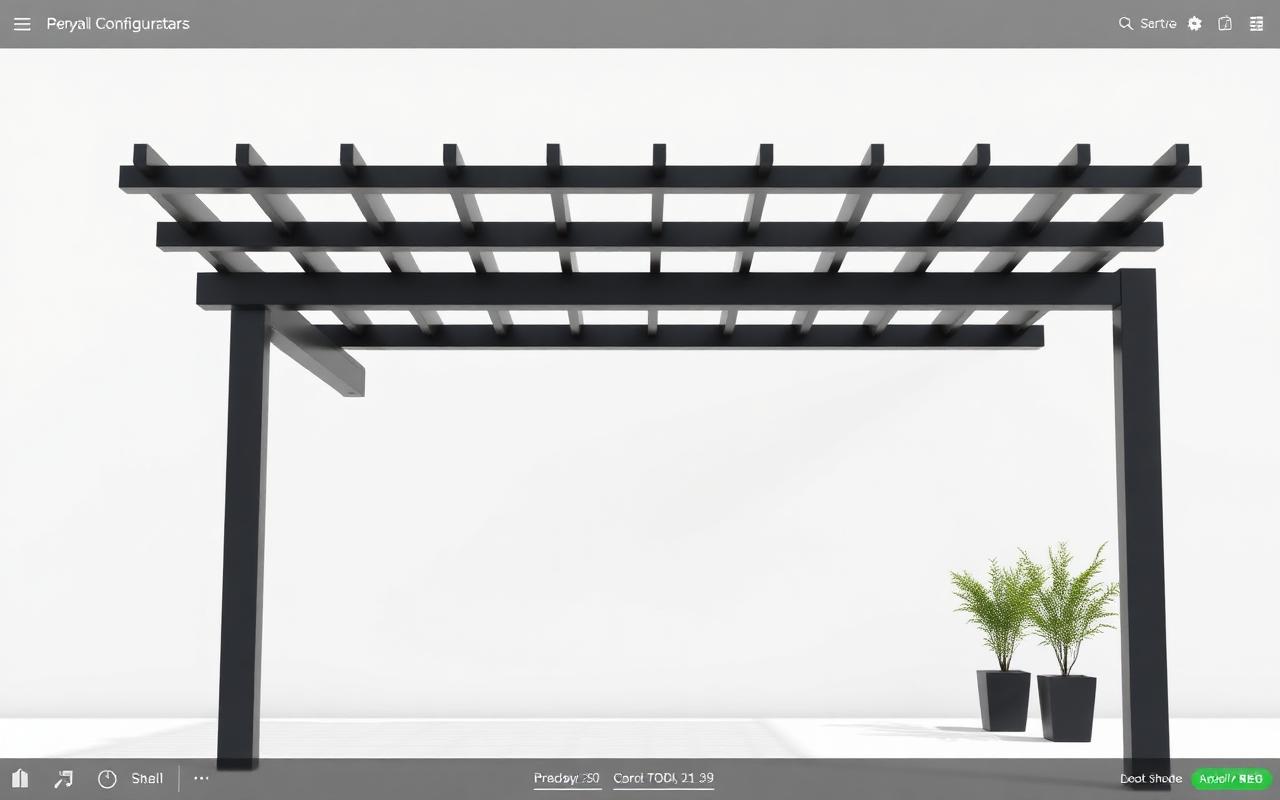
Configurix unifies those steps: a real‑time 3D configurator that produces the exact price, a branded PDF quote, permit‑ready 2D plans, an install pack for crews, a digital contract for signatures, and appointment scheduling — all from the same configuration. Put another way: the same model the customer approves becomes the exact instructions your factory and crew use on site. (configurix.com)
The buyer intent: what you want when evaluating tools
If you’re evaluating systems to reduce field errors and shorten time‑to‑close, look for these capabilities:
- Real‑time 3D configurator that models exactly what’s built (not a marketing mockup).
- AR preview in the customer’s real home so dimensions and fit are validated before sign‑off.
- Automatic pricing rules and margin controls so the quote equals the final invoice.
- One‑click branded PDF quotes that include 2D dimensioned plans, parts lists and 3D snapshots.
- Auto‑generated install sheets, BOMs and crew tasks that push to a shared calendar.
- Digital contract signing and a project portal for photos, change orders and completion sign‑off.
Configurix includes all of these in one platform so the lead‑to‑install workflow is seamless. That single‑source approach is the fastest path to fewer RFI’s, fewer returns and far fewer warranty callbacks. (configurix.com)
How a single configuration prevents rework — end‑to‑end (step‑by‑step)
- Lead capture and guided configuration
- Embed a configurable widget on product pages (for example: pergolas or awnings) or use showroom/tablet mode. The first site measurement can be captured or entered into the configurator during the sales visit, and the model updates live. This reduces measurement errors that cause rework. (configurix.com)
- AR verification on the customer’s property
- Launch an AR preview so the homeowner sees the planned installation in their actual garden or façade. AR closes 'fit' questions before you leave the visit, increasing buyer confidence and lowering the chance of returns or scope changes later. Academic and industry research shows AR increases purchase confidence and reduces return intent when visualization uncertainty is solved. (mdpi.com)
- Automatic pricing and margin rules
- Every option in the 3D model flows into the pricing engine. No manual copy‑paste: discounts, accessory pricing and labor rules are applied automatically so the quote is the invoice. This avoids ad‑hoc on‑site pricing decisions that later produce scope changes. (configurix.com)
- Generate the full install pack instantly
-
One click produces a branded PDF quote that includes:
- Itemized pricing and payment schedule
- 2D plans with dimensions suitable for permits
- A parts list / BOM and cutting/order notes for the factory
- Install sheet and step‑by‑step crew checklist
- 3D snapshots and AR reference imagery attached to the job record
Because the install pack is auto‑generated from the same model the customer approved, there is no interpretation gap between sales, production and the crew. (configurix.com)
- E‑sign and schedule in one flow
- The customer signs the branded contract in the same platform; signing triggers the shared calendar to create site‑visit and install appointments and assigns crew tasks. The field team receives the install sheet, materials list and any attached photos or AR captures on their mobile project card. That handoff — from click to crew — is the moment rework risk collapses. (configurix.com)
Typical outcomes: what installers measure after adopting an integrated workflow
Below is a realistic before/after table you can expect when the configurator, quote generator, CRM and calendar are unified into one system.
| Metric | Before (disconnected tools) | After (single 3D→quote→install system) |
|---|---|---|
| Average time to create first quote | 1–3 days | < 25 minutes (on first visit). (configurix.com) |
| Rework / returns (% of project cost) | 4–8% (industry median). (autodesk.com) | Often reduced 30–60% depending on discipline — fewer measurement errors and clearer install packs. (cnba.us) |
| Days from lead to signed contract | 7–21 days | 0–3 days (same‑day signings with AR + e‑sign). (configurix.com) |
| Scheduling conflicts / double bookings | Frequent | Near zero (shared calendar + auto tasks). (configurix.com) |
| Time spent resolving RFIs | Hours–days | Minutes (clear 2D/3D docs attached to project). (configurix.com) |
Note: results vary by company size and discipline, but multiple industry analyses confirm digital coordination and 3D workflows materially cut errors and rework. (autodesk.com)
Practical checklist to implement this at your company (30–60 day rollout plan)
Week 1–2: Catalog & pricing rules
- Export your product catalog and price lists.
- Define margin rules, labor rates and accessory pricing.
- Map options that must drive BOM entries (e.g., posts, beam lengths, glazing types).
Week 2–4: Build the 3D configurator and AR assets
- Create parametric models for common assemblies (pergolas, verandas, awnings, AC mounts).
- Add photoreal materials and camera presets for sales snapshots.
- Prepare AR deployable assets to match the 3D model and materials.
Week 4–6: Configure document templates & workflows
- Design branded PDF quotes with header, terms, 2D plan layout and install sheet sections.
- Set e‑sign contract text and approval rules.
- Create calendar types and crew roles for scheduling.
Week 6–8: Pilot with your top sales rep
- Run real site visits using the configurator + AR.
- Capture feedback, adjust pricing rules and verify BOM accuracy.
- Train field crews to use mobile project cards and install sheets.
Ongoing: measure and iterate
- Track rework events, RFI counts, time to sign and quote acceptance rate.
- Use analytics to refine pricing, UX steps and crew checklists.
Configurix supports every step above — from product catalog to AR to signed contract and install scheduling — so the pilot and rollout are fast and measurable. (configurix.com)
Why this is different from ‘3D for marketing’
Many teams use 3D purely for visuals; that can increase interest but it doesn't stop field mistakes. The difference that lowers rework is a 3D experience that is 'live' — every dimension and option drives pricing, BOMs, 2D plans and install sheets. Add AR verification and e‑sign, and you remove the key causes of rework: bad data, unclear specs and manual transcription between teams. Multiple studies show that when AR reduces visualization uncertainty, customer decisions speed up and returns decline. (mdpi.com)
Quick ROI model (example)
Assume a small installer averages $6,000 per job and does 200 jobs/year (total revenue $1.2M). If rework is 5% of project cost today (~$60,000) and an integrated 3D→install workflow reduces rework by 40%, you save $24,000/year in direct costs — before counting faster sales cycles and fewer scheduling penalties. Industry research indicates these efficiency gains accumulate quickly when digital coordination is applied. (autodesk.com)
Where to start (next steps)
- Run a 1‑day audit of your top 10 job types and list the 5 most‑common causes of rework.
- Build parametric models for those 10 job types first (pergolas and awnings are ideal early wins). See product pages for example templates: /products/pergola-configurator and /products/awning-configurator.
- Pilot AR verification on 20 visits and measure days‑to‑contract and RFI frequency.
- If you want a single‑system approach that also includes white‑label options, branded PDFs, automatic pricing, digital signing and a built‑in calendar — start by booking a demo at the home page: /.
Bottom line
The largest, most predictable reductions in install rework come from removing handoffs: one authoritative model, live pricing, AR verification and an auto‑generated install pack that travels to the crew. When those pieces are native to the same platform you cut errors, close deals faster and protect margin. Configurix is built for precisely that workflow — real‑time 3D, AR on the customer’s own home, white‑label PDFs, automatic pricing, e‑sign and a shared calendar so you turn a lead into a signed, scheduled job with minimal friction. (configurix.com)
Sources
Autodesk Blog — 100+ Construction Industry Statistics (2025)
MDPI — The Role of Augmented and Virtual Reality in Shaping Retail Marketing: A Meta‑Analysis (2024)
McKinsey Global Institute — Reinventing Construction: A Route to Higher Productivity (2017)
Ready to try Configurix?
See how the configurator, quoting and CRM work together for your business.
Book a demo →Related articles
Genehmigungs‑Dossiers automatisieren: Pergola‑Angebote mit 3D, AR & E‑Sign
Wie Händler und Hersteller Genehmigungs‑Unterlagen automatisch aus einem 3D/AR‑Konfigurator erzeugen, als markenkonformes PDF ausgeben und mit digitaler Unterschrift in Aufträge verwandeln.
30‑Tage‑Pilot: Live‑3D/AR, Marken‑PDF & E‑Sign für Pergola‑Händler
Konkreter 30‑Tage‑Pilotplan für Pergola‑ und Markisenhändler: Live‑3D + AR‑Preview, automatische Preisregeln, markenkonforme PDF‑Angebote und digitale Unterschrift — von Lead bis Montage in einem Workflow.
WhatsApp & SMS‑Automatisierung: Pergola‑Leads in 48 Stunden abschließen
Wie Außensonnenschutz‑Händler WhatsApp/SMS‑Automation mit Configurix verknüpfen, um Leads sofort zu qualifizieren, real‑time 3D/AR‑Präsentationen zu liefern, markenkonforme PDF‑Angebote zu senden und innerhalb von 48 Stunden zu unterschriebenen Aufträgen zu kommen.